
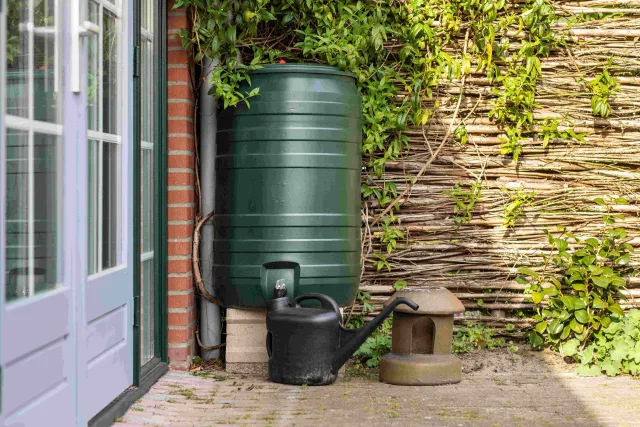
Harvesting rainwater for use within the organisation
Water
- Solution type
- Everyday action
- Theme
- Water
Why collect rainwater for indoor uses? According to the United States Environmental Protection Agency (EPA), rainwater harvesting can reduce the drinking water consumption of a household or a business by 50 to 70 %. This helps to preserve drinking water, which is an increasingly scarce resource. How to collect rainwater for indoor uses? To collect rainwater and reuse it for indoor purposes, such as flushing toilets, various installations can be put in place: - Gutters: Gutters installed along the roofs collect rainwater and direct it to the collection system. Gutter filters can be added here to prevent debris such as leaves, branches and other particles from entering the system. - Collection pipes: The pipes collect rainwater from the gutters and direct it to the storage tank. - A storage tank: A tank is used to store the collected rainwater. It can be buried or installed above ground, and its capacity depends on the hotel’s water needs. - A filtration system: A filtration system is needed to remove impurities such as sediment, organic contaminants and micro-organisms. This ensures that the rainwater is clean and safe for indoor use. - A treatment system: Depending on the quality of the water and the intended uses, a treatment system may be necessary. This can include devices such as UV sterilisers, activated carbon filters, or other purification methods. - A pump: A pump is used to deliver the stored water to the points of use, such as toilets. - A separate plumbing network: A separate plumbing network is often needed to carry the recovered water to the indoor points of use, making sure it does not mix with drinking water. - Control and regulation devices: Devices such as regulating valves and sensors can be used to control the water flow and ensure efficient use.
- Sector:
- France
Its features
Environmentally friendly
- Environmental sustainability: Rainwater harvesting reduces the demand on municipal or groundwater resources, which helps to preserve aquatic ecosystems and natural habitats. In addition, by reducing drinking water consumption, the pressure on wastewater treatment systems is also reduced. - Preservation of drinking water, an increasingly scarce resource
Member map
Map tiles are unavailable. Positions and the list remain available.
No located members for this selection.