
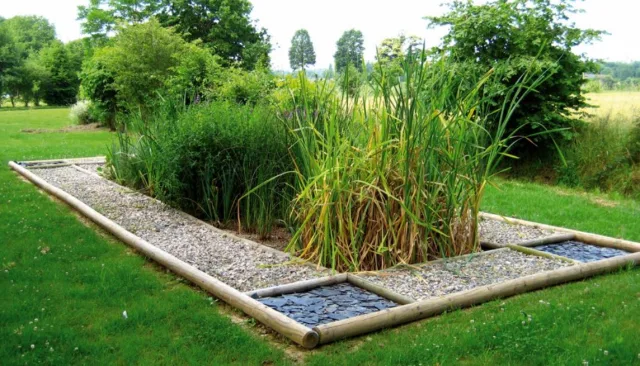
Installing a plant-based wastewater treatment pond
Water
- Solution type
- Everyday action
- Theme
- Water
Why set up a phytopurification basin? Phytopurification is a natural, odourless process for filtering or cleaning wastewater using plants. The most common purifying plants are bamboo, reeds, bulrushes and sedges. The bacteria living in the roots of these plants can purify water thanks to their organic characteristics. Setting up a phytopurification basin offers several ecological and environmental benefits, including: - Natural purification of wastewater - Reduced pollution - Conservation of water resources - Reduced ecological footprint And finally, it is very attractive, low-cost and requires very little maintenance!
- Sector:
- France
Its features
Environmentally friendly
- Natural purification of wastewater: Phytopurification uses aquatic plants and micro-organisms to break down the pollutants present in wastewater. This makes it possible to treat water naturally, without chemicals or energy-intensive processes. - Reduced pollution: Aquatic plants absorb and assimilate the nutrients contained in wastewater, such as nitrates and phosphates, thereby helping to reduce water pollution. - Conservation of water resources: By allowing the purified water to be reused for watering or other non-potable needs, phytopurification helps conserve water resources. - Reduced ecological footprint: Compared with other wastewater treatment methods, phytopurification tends to have a lower ecological footprint, as it requires neither costly chemicals nor large amounts of energy.
Member map
Map tiles are unavailable. Positions and the list remain available.
No located members for this selection.