
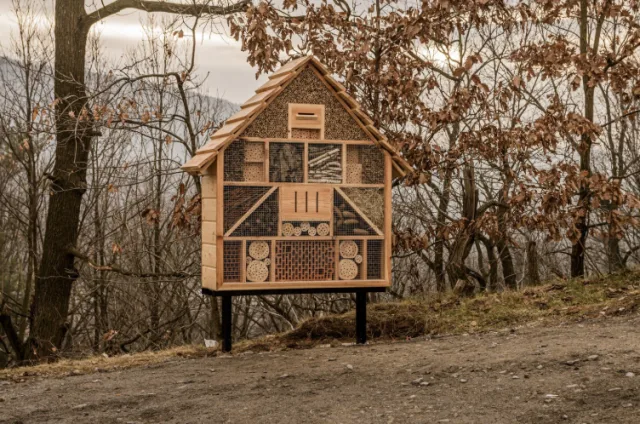
Installing an insect hotel
Biodiversity
- Solution type
- Everyday action
- Theme
- Biodiversity
What is an insect hotel? An insect hotel is a structure that offers homes or shelters to the beneficial and pollinating insects of the garden, which are short of housing. It can host, for example, solitary bees that will pollinate the vegetable garden and rid it of “pest” insects. The insect hotel has several functions: In autumn and winter, the primary function of an insect hotel is to help insects survive better and so allow them to act when the sun returns. In spring and summer, the hotel allows insects to lay their larvae (notably bees). How to set up an insect hotel? You can simply install nesting boxes, shelters or “insect houses” sold in shops. But you can also build your own insect hotel using reclaimed materials. This can be a team-building activity to organise within the organisation. Here are the different steps for making an insect hotel: 1. Choose the materials needed to create the insect shelters: logs, bricks, straw, bamboo canes, etc. It is recommended to choose local materials that offer holes of various sizes to create cavities for the insects. 2. Build the wooden frame, reinforcing it enough to bear a significant weight. It is advisable to favour resistant wood such as Douglas fir, larch or chestnut, and to place the heaviest materials towards the bottom. 3. Cover the structure with a waterproof roof, for example a slate roof. 4. Fill the hotel with the chosen materials: straw, wood, bamboo canes, etc. 5. Choose where to place the insect hotel: a sunny spot, sheltered from the wind. It is advisable to avoid places where water stagnates, and to fix the hotel to a stable structure at a height accessible to insects.
- Sector:
- France
Its features
Environmentally friendly
- Preservation of biodiversity - Preservation of the environment, because the insects in the hotel (bees, lacewings, ground beetles, etc.) fight “harmful” insects (aphids, scale insects, slugs, mites, etc.). As a result, there is no longer any need for chemical products, which are harmful to the environment.
Member map
Map tiles are unavailable. Positions and the list remain available.
No located members for this selection.