
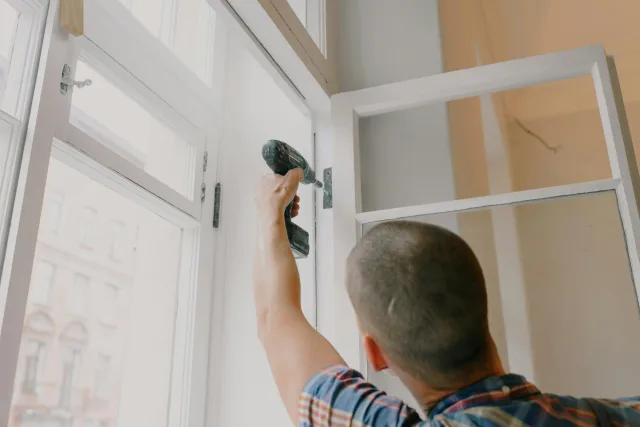
Installing windows with enhanced thermal insulation
Energy
- Solution type
- Everyday action
- Theme
- Energy
Why install double-glazed windows with enhanced insulation (VIR) or triple glazing? According to Ademe, 10 to 15% of the heat in a home escapes through doors and windows. The thermal performance of a glazed wall depends on the nature of the frame and the glazing surround (PVC, aluminium or wood), but also on the performance of the glazing and the quality of the window installation. The two most effective solutions in terms of energy, thermal comfort and cost reduction are: • Double glazing with enhanced insulation (VIR) It has an insulating power two to three times greater than that of standard double glazing, and more than four times greater than that of single glazing. Combined with a solar gain management system (external shading), it also helps limit overheating in summer. The space between the two panes is filled with argon, and a thin transparent layer, generally silver-based, is deposited on one of the faces of the glass. This layer is low-emissivity: it acts as a shield to stop indoor heat from escaping outside in winter. • Triple glazing It consists of three panes of glass enclosing two spaces filled with argon or krypton, with two low-emissivity layers on the inner side of the spaces. The thermal transmittance coefficient is excellent, around 0.6 to 0.8 W/m2.K (compared with about 1.1 to 1.2 for VIR). On the other hand, the solar factor is altered and the light transmission coefficient may be lower than that of double glazing. Its environmental impact is also significant, since the extra weight of this window requires 25% more materials in order to keep good mechanical properties. Three performance indicators are essential when choosing glazing: - the thermal transmittance coefficient (Uw), reflecting insulation capacity and expressed in W/(m2.K); - the solar factor (Sw), between 0 and 1, reflecting the share of solar radiation transmitted to the inside of the building (the higher it is, the greater the heat gains); - the light transmission coefficient (Tlw), between 0 and 1, expressing the ability of the glazed wall to transmit natural light to the inside of the building.
- Sector:
- France
Its features
Environmentally friendly
- Reduction of greenhouse gas emissions: By reducing the energy consumption of buildings, enhanced-insulation windows help lower greenhouse gas emissions. Less energy used means less burning of fossil fuels, which results in a smaller carbon footprint. - Reduced heating and air-conditioning needs: With better insulation, heating needs in winter and air-conditioning needs in summer are reduced. This results in lower energy consumption for heating and air conditioning, thus contributing to energy savings and a reduced environmental impact.
Member map
Map tiles are unavailable. Positions and the list remain available.
No located members for this selection.