
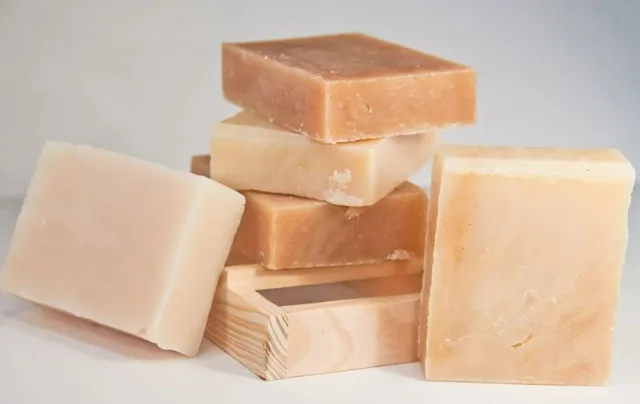
Making hand soap on site
Sustainable purchasing
- Solution type
- Everyday action
Why make your own hand soap? Making your own soap offers several advantages: - Fewer single-use plastic packaging items - Full knowledge of the ingredients used - Reduced pollution For the soap to be organic and eco-friendly, the process is cold saponification. Industrial soaps, by contrast, come from hot saponification, in which the mixture is heated to more than 120 degrees for many hours. Cold saponification is a longer process, but it preserves the superfatting and the moisturising properties of the soap and has no harmful impact on the environment. In addition, making your own soaps does not require buying many ingredients. Indeed, the main ingredients needed to make an organic soap are vegetable oil, caustic soda, water and essential oils. Many recipes exist in books and on the Internet! Source: https://consommons-autrement.fr/fabriquer-son-savon-bio-et-ecolo/ https://natura-bon.com/savon/differences-entre-la-saponification-a-chaud-et-a-froid/
- Sector:
- France
Its features
Environmentally friendly
- Less waste generated by bought soap - Reduced greenhouse gas emissions linked to transport - Fewer plastic packaging items used, given that in most cases plastic is incinerated, ends up in landfill or in nature - Reduced use of chemicals - Reduced water pollution, as natural soaps contain no chemical or harmful products - Conservation of energy resources, since cold saponification does not require the oven-heating step used by industry in hot saponification
Community solidarity
Use of harmless ingredients that are healthier than those in industrial hand soap
Member map
Map tiles are unavailable. Positions and the list remain available.
No located members for this selection.