
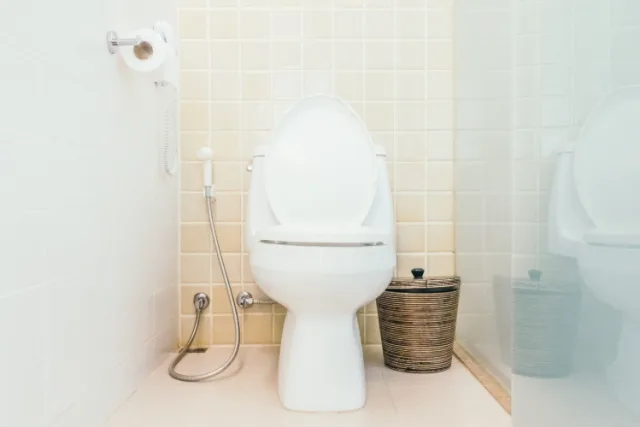
Providing bins in washrooms
Waste
- Solution type
- Everyday action
- Theme
- Waste
Why provide a bin in the restrooms? It is important to know that the presence of a bin for intimate hygiene waste is a regulatory requirement. Article R4228-10: “There is at least one toilet and one urinal for twenty men and two toilets for twenty women. The headcount taken into account is the maximum number of workers present simultaneously in the establishment. At least one toilet has a water point. In establishments employing mixed staff, toilets are separate for female and male staff. Toilets reserved for women include a container for sanitary products.” Indeed, providing a bin in the restrooms is necessary from an environmental point of view but also from an economic one, by avoiding plumbing problems. What are the main types of waste targeted? - Feminine hygiene waste (tampons, pads, etc.) - Wipes (even if labeled biodegradable) - Toilet paper rolls (even if labeled biodegradable) - Chewing gum - Cotton swabs - Contact lenses - Leftover medication - Hazardous waste (bleach, leftover air freshener, leftover paint, etc.) - Condoms - Hair - Greasy waste - Etc. It is important to raise awareness of these guidelines among users / customers etc. but also among the cleaning staff of the restrooms concerned (especially regarding the use of wipes and chemical cleaning products, which tend to end up in the toilets).
- Sector:
- France
Its features
Prevention of water pollution
Bins in restrooms allow users to dispose of waste properly, such as tissues, cotton swabs, sanitary pads, etc., rather than throwing them down the toilet. This helps prevent water pollution by avoiding the introduction of unwanted substances into sewage systems and watercourses.
Protection of aquatic ecosystems
By preventing waste from ending up in water networks, the risk of contamination of aquatic ecosystems is reduced. Indeed, certain non-biodegradable materials can have harmful effects on aquatic life and marine ecosystems.
Water and energy savings
Proper waste sorting avoids the need for additional wastewater treatment. This can contribute to water and energy savings associated with wastewater treatment processes.
Preservation of sanitary infrastructure
By preventing inappropriate waste from being thrown down the toilet, sanitary infrastructure, such as pipes and wastewater treatment plants, is preserved, limiting the risk of clogging and damage.
Environmental awareness
The presence of bins in restrooms and appropriate signage can also help raise people’s awareness of the importance of disposing of waste correctly. This helps promote environmentally friendly behaviors to be replicated and to point out the impacts of poor waste management.
Reducing waste
By encouraging individuals to use bins rather than toilets for certain types of waste, we contribute to the overall reduction of waste in water networks.
Member map
Map tiles are unavailable. Positions and the list remain available.
No located members for this selection.