
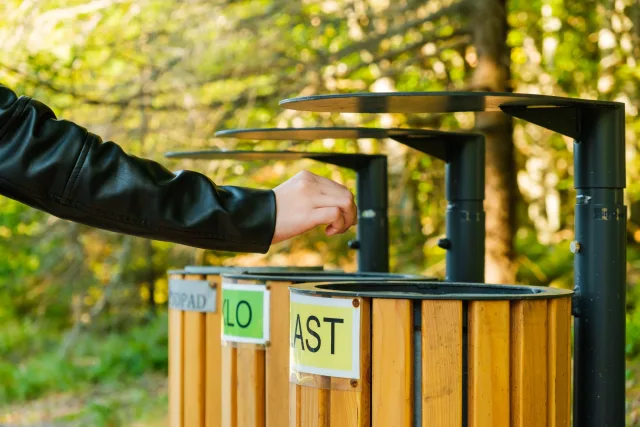
Sorting the 5 / 7 mandatory waste streams
Waste
- Solution type
- Everyday action
- Theme
- Waste
Why is it important to sort waste into the 7 mandatory streams? Sorting waste into the 7 mandatory streams contributes to several pillars of sustainable development. In 2023, the share of waste sent to landfill stood at 21% according to the annual report of the Cour des Comptes. The aim would be to reduce it to 10% by 2035. Waste sorting in companies therefore has a strong impact, since it plays a major part in this reduction. This eco-gesture has the advantage of being simple to carry out, since all it takes is installing sorting bins and setting up a collection system. It is also possible to raise employee awareness in order to train them to sort these 7 streams: brochures, training sessions, tutorials… Sorting waste is a simple act to carry out every day, with a strong impact.
- Sector:
- France
Its features
Environmentally friendly
- Preservation of natural resources: Sorting waste makes it possible to recover the raw materials present in recyclable waste, such as paper, plastic, glass and metal. By recycling these materials, the need to extract new natural resources is reduced, which helps preserve the environment. - Reduction of greenhouse gas emissions: Manufacturing new products from recycled materials generally requires less energy than production from virgin raw materials. By reducing energy consumption, greenhouse gas emissions are also lowered, which helps fight climate change. - Reduction of landfilled waste: By sorting waste, recyclable materials are separated from non-recyclable waste. This reduces the amount of waste sent to landfill sites, which limits soil and groundwater pollution. - Preservation of the environment: Some waste, such as chemicals, batteries and accumulators, can be toxic to the environment if not treated properly. By separating it from other waste and sending it to appropriate treatment channels, its dispersal into nature is avoided.
Second life
- Once sorted and collected, waste is recovered through suitable channels, which gives it a second life.
Solidarity
- Raising awareness of responsible consumption: Waste sorting is a concrete way to make people aware of their consumption and the waste they produce. By realising how important sorting is, people are encouraged to adopt more sustainable behaviours, such as reducing packaging or choosing recyclable products. - Compliance with regulations: In many countries, waste sorting is a legal obligation. Complying with the sorting of the 7 mandatory streams makes it possible to meet current regulations and avoid potential penalties.
Member map
Map tiles are unavailable. Positions and the list remain available.
No located members for this selection.