
Spring water in returnable glass bottles - CAROLA
Food and drink
- Solution type
- Product
- Theme
- Food and drink
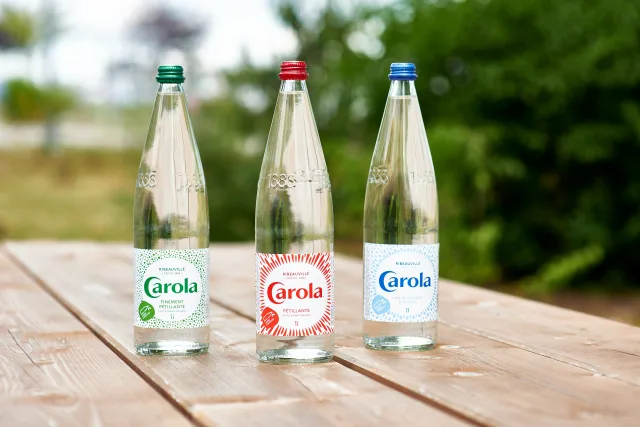
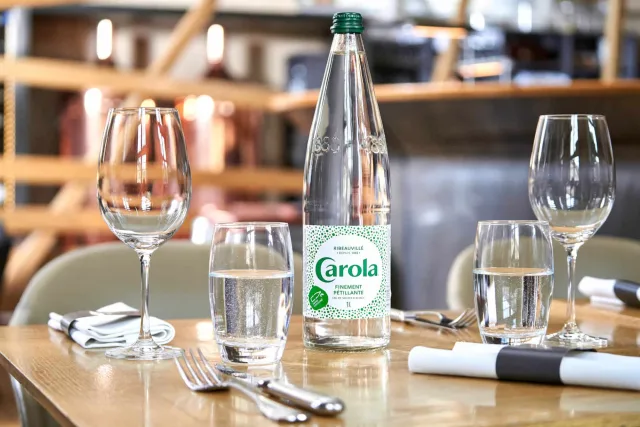
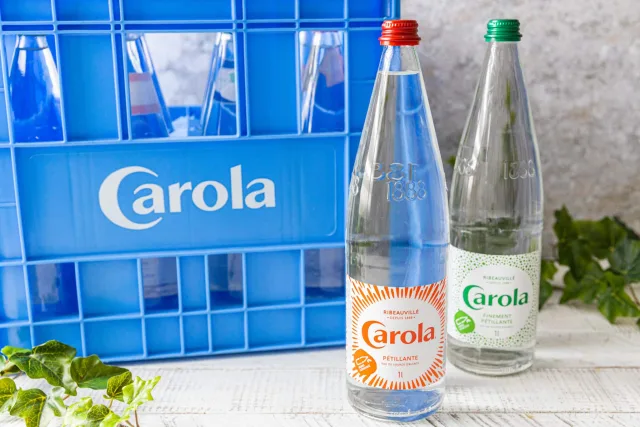
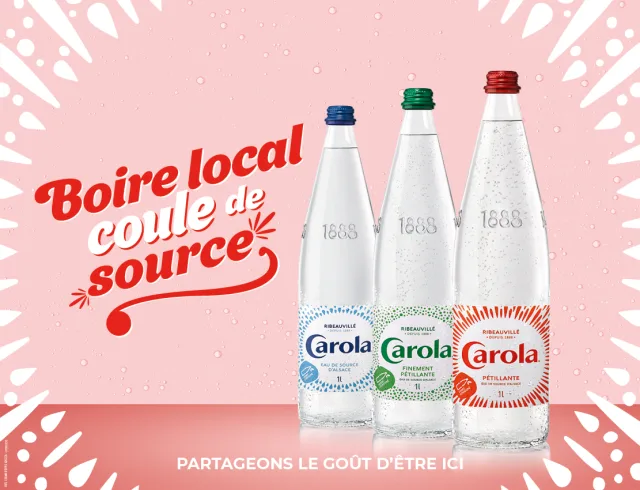
Carola spring water is drawn at Ribeauvillé, in the heart of the Ballons des Vosges Regional Nature Park. Tapped at a depth of more than 150 metres, this groundwater is naturally pure and drinkable. Its quality is preserved by the geological configuration of the catchment area, made up in particular of rock and clay, which provides natural protection along its underground course. Its range of returnable glass bottles has existed since 1922 and accounts for 20% of CAROLA volumes.
- Sector:
- Doubs, Bas-Rhin, Haut-Rhin, Territoire de Belfort
- Products concerned:
- Blue / Green / Red
Its features
Preserving resources through reuse
The reuse of bottles helps reduce waste production and limit the manufacture of new packaging, a process that consumes a great deal of energy and generates greenhouse gas emissions.
Natural spring water without treatment
Carola spring water is naturally drinkable. Coming from deep underground, it is naturally protected and filtered below ground, unlike tap water described as surface water, from lakes, rivers or groundwater, which requires treatment before it can be consumed.
Protecting water resources and managing the aquifer sustainably
Carola works to preserve the water resource over the long term by limiting its withdrawals to 10% of the naturally renewable volume of the aquifer, a threshold half the level recommended by the European Environment Agency. The company also optimises its water consumption at its bottling site, among the most efficient in the world, using only 1.2 L of water to produce 1 L of bottled water.
Local production and short-distance logistics
Sourced and bottled in Alsace, Carola waters benefit from a local model that limits transport distances. The return of empty bottles via points of sale and local distributors also helps reduce the kilometres travelled by each container, thereby contributing to lower CO₂ emissions from transport.
Second life
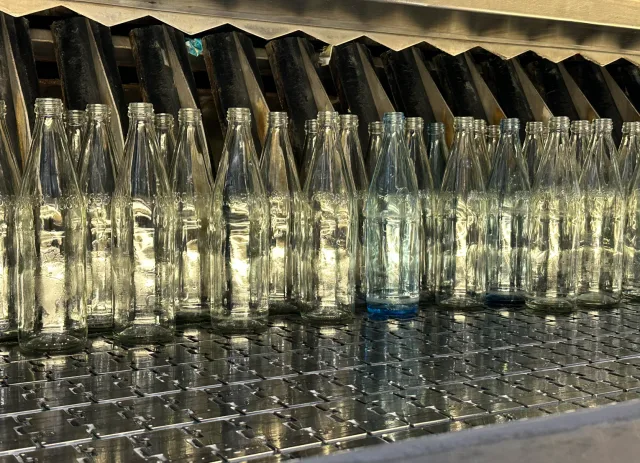
Thanks to the deposit system, bottles are collected after use, washed, inspected and put back into circulation. This reuse process considerably extends their lifespan while reducing the consumption of new raw materials and the production of packaging. As a result, glass bottles complete on average 30 cycles of use between consumers and the Carola plant, and some remain in service for more than 15 years. When they can no longer be reused and reach the end of their use, the bottles are recycled to produce new bottles. Glass has the advantage of being infinitely recyclable, with no loss of quality or purity, allowing the material to re-enter the production cycle in a lasting way.
Life cycle of this solution
Step 1: The producer
Draws and bottles the water while minimising environmental impact.
Step 2: The transport provider
Transports the product from the producer to the distributor.
Take this placeStep 3: The distributor
Markets and distributes the product.
Step 4: The committed consumer
Consumes this product for its environmental benefits.
Take this placeStep 5: The collector
Collects returnable bottles and checks their quality.
Step 6: The recovery operator
Collects, cleans and checks the bottle for reuse. The aluminium cap is sorted and recovered.
Member map
Map tiles are unavailable. Positions and the list remain available.
Selected members (2)
- CAROLARibeauville
- ADAM BOISSONSGuewenheim