
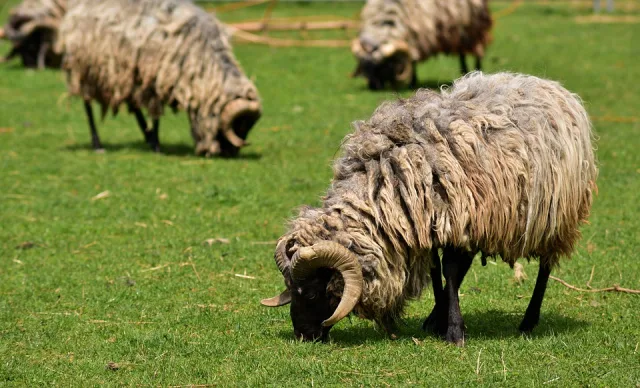
Using conservation grazing
Biodiversity
- Solution type
- Everyday action
- Theme
- Biodiversity
Why practise eco-grazing? Eco-grazing consists of maintaining green spaces or natural areas with herbivorous animals, such as cows, sheep, donkeys… Eco-grazing has several advantages: - Ecological management of green spaces: Eco-grazing makes it possible to maintain green spaces in a more natural and environmentally friendly way. The animals graze the grass, thereby reducing the need for lawn mowers or chemicals to maintain green areas, which pollute groundwater. - Preservation of biodiversity: By letting animals graze, local biodiversity is encouraged. Animals can contribute to the dispersal of seeds, and their presence can create an ecological balance that benefits other species. - Reduction of the carbon footprint: Using animals to maintain green spaces reduces dependence on petrol or electric machinery, which can help to reduce the greenhouse gas emissions linked to the maintenance of public spaces. - Improvement of soil quality: The action of the animals, in particular grazing and trampling, can help to improve soil structure and encourage its fertility. How to set up eco-grazing? Any organisation with an unused green space can consider eco-grazing. Here are the different steps of the set-up: 1. Choosing the land: The first step is to choose the plot or plots where you wish to develop eco-grazing. This must be done before choosing the species, not the other way round. 2. Choosing the species: Next, you need to choose the species suited to the selected plot or plots. 3. Designing the grazing plan (rotation of the different species across the plots) 4. Providing the equipment suited to the animals (fences, pens, wire netting…) 5. Choosing the management mode suited to the project 6. Paying attention to administrative and health rules (declaration to the departmental livestock body (EDE), herd number…) 7. Developing animal care skills (observing the condition of the animals, basic care…)
- Sector:
- France
Its features
Environmentally friendly
- Soil protection, because animals help to fight the spread of certain invasive species without resorting to chemicals and heavy machinery that compact the soil. - Reduction of air pollution: indeed, animals can replace the use of mechanical machinery used for ground maintenance. - Reduction of greenhouse gas emissions - Preservation of biodiversity, because this gentle method makes it possible to maintain a natural and balanced renewal of vegetation.
Member map
Map tiles are unavailable. Positions and the list remain available.
No located members for this selection.