
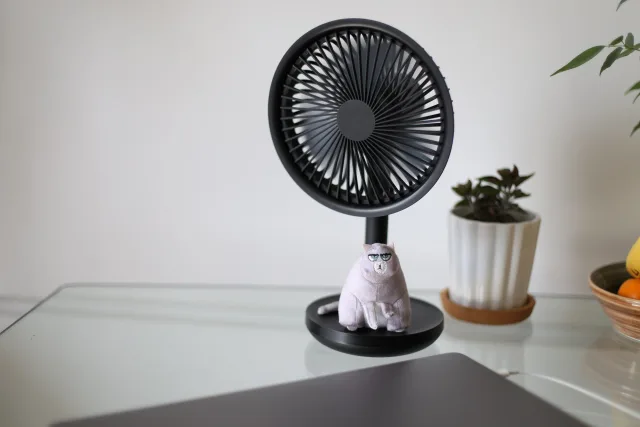
Using fans rather than air conditioners
Energy
- Solution type
- Everyday action
- Theme
- Energy
Why choose fans rather than air conditioners? Air conditioning has several significant environmental impacts: • Refrigerant emissions: In 2019, the use of air conditioning contributed to the emission of 5.4 million tonnes of CO₂ equivalent into the atmosphere, mainly due to the release of refrigerants. • Contribution to CO₂ emissions: The air conditioning sector accounts for around 5% of the total CO₂ equivalent emissions of the building sector, making it a significant source of air pollution. • Energy consumption: In 2020, the electricity consumption of air conditioners in the tertiary sector amounted to 10.6 TWh (terawatt-hours), which represents a significant amount of energy used to run air conditioners. • Urban temperature: Air conditioning systems contribute to the urban heat island effect by releasing heat into the atmosphere, which can lead to a rise in temperature in urban areas. What are the advantages of using fans? • Environmental sustainability: Unlike air conditioners, which use chemical refrigerants that contribute to global warming (such as hydrofluorocarbons - HFCs), fans have no direct impact on the environment in terms of greenhouse gases. • Lower energy cost: Fans are more energy-efficient because they do not actually cool the air but simply circulate it. However, this air circulation can create a feeling of coolness, which reduces reliance on air conditioning and saves energy. • Simplicity and ease of maintenance: Fans are simpler mechanical devices than air conditioners, which makes them less prone to breakdowns and in need of fewer costly repairs. Unlike air conditioners, they do not require a professional to handle refrigerants. • Flexibility and versatility: Fans offer many ways of improving thermal comfort. Whether with ceiling fans, table fans or standing fans, it is possible to create an air current that contributes to a feeling of coolness, even without actually lowering the room temperature. In summary, using fans has advantages such as simplicity of use and maintenance, lower energy cost, flexibility in improving thermal comfort and a lower environmental impact compared with air conditioners. •https://expertises.ademe.fr/batiment/passer-a-laction/elements-dequipement/rafraichissement-climatisation •https://presse.ademe.fr/2021/06/la-climatisation-vers-une-utilisation-raisonnee-pour-limiter-limpact-sur-lenvironnement.html •https://agirpourlatransition.ademe.fr/particuliers/vacances-loisirs/ete/canicule-comment-garder-logement-frais •https://climat.be/changements-climatiques/causes/gaz-a-effet-de-serre •https://www.notre-environnement.gouv.fr/themes/climat/les-emissions-de-gaz-a-effet-de-serre-et-l-empreinte-carbone-ressources/article/les-differents-formats-des-donnees-d-emissions-de-gaz-a-effet-de-serre?type-liaison=
- Sector:
- France
Its features
Environmentally friendly
• Reduced electricity consumption • Reduced GHG emissions
Member map
Map tiles are unavailable. Positions and the list remain available.
No located members for this selection.