
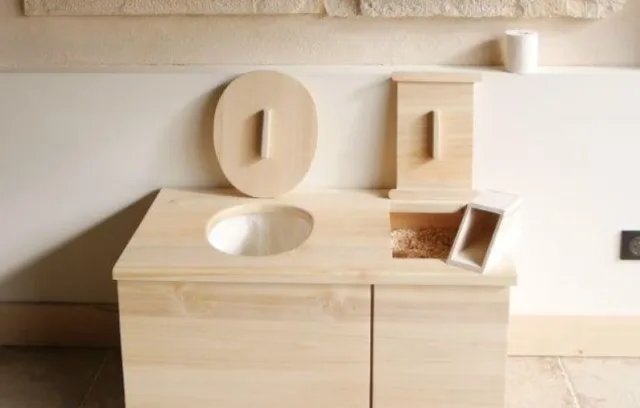
Installing dry toilets
Water
- Solution type
- Everyday action
- Theme
- Water
The Eco-Gesture Sheets highlight actions that Consomm'Acteurs can carry out to reduce the environmental impact of their organisation. An eco-gesture is the result of a voluntary action put in place in a company, on a targeted theme, that optimises the consumption of natural resources and reduces the organisation’s pollution or amount of waste. Why install dry toilets? Dry toilets are a widespread technique in Scandinavian countries. They are gradually becoming part of the French landscape. For more than 10 years, dry toilets have been a practical, hygienic and ecological alternative. Unlike chemical toilets, site cabins or other temporary site facilities, dry toilets promote respect for hygiene conditions and for the environment. Dry toilets are therefore an alternative that is easy to implement and ecologically effective in many respects. Their main benefit is a significant saving of water. Indeed, a conventional flush toilet uses on average 6 litres of drinking water per use. That still amounts to up to more than 40 litres of drinking water per day and per inhabitant. For companies in public works, for example, installing dry toilets is a real advantage compared with chemical toilets. The regulations are much more flexible for this type of installation in companies, and attitudes are also changing; it has to be said that no unpleasant odour is noticed in well-maintained dry toilets. How are these toilets managed? As a first step, it may be worthwhile to seek advice from the public non-collective sanitation service, which depends on the municipality where the installation is located. Its role is to advise on and support the installation of structures such as septic tanks and dry toilets, then to check their compliance with the 2009 law (the Order of 7 September 2009 sets the technical requirements applicable to non-collective sanitation installations of the dry toilet type). In addition, it is important to know that dry toilets can be inspected at any time by a SPANC technician, so it is better to be compliant from the design stage of the project! Then, you must choose the installation that best suits the organisation. Various models of dry toilets for collective use are increasingly common on the market, increasingly easy to use and increasingly affordable. More and more companies, researchers and associations aim to develop the use of dry toilets. Even some players for whom environmental concerns are not a strong point are starting to opt for dry toilets. They are rather attracted by the hygiene advantages that dry toilets offer.
- Sector:
- France
Its features
Environmentally friendly
- Significant savings of drinking water (an increasingly scarce resource) - Avoids the use of septic tanks and water inlet/outlet circuits - Encourages the use of eco-friendly toilet paper - Avoids the use of various chemical products (detergent, tablets, etc.) - Relieves wastewater treatment plants, which are often undersized today - Allows organic matter to return to the soil as a natural fertiliser
Second life
In most cases, the litter from dry toilets becomes a natural soil conditioner used in agriculture or gardening. Indeed, once biodegraded through composting or anaerobic digestion, the by-products are transformed into a natural soil conditioner. In the case of on-site composting, it is recommended to leave the waste in the compost for a minimum of 24 months. Of course, a number of good composting practices must be followed (aeration, etc.).
Member map
Map tiles are unavailable. Positions and the list remain available.
No located members for this selection.