
Using free-cooling methods (passive cooling)
Energy
- Solution type
- Everyday action
- Theme
- Energy
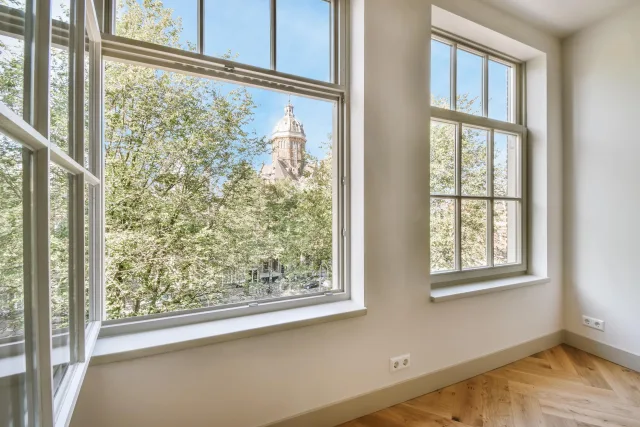
Why implement free-cooling techniques? Air conditioning is the first response to overheating problems in buildings. Often misused, it leads to high electricity consumption. Passive cooling, “free-cooling”, “geocooling” or “passiv cooling” are terms often used in the eco-housing movement. The systems implemented use the natural resources available on site to lower the indoor temperature. It is important to note that these systems cannot hold a set indoor temperature, but they offer many advantages: - Energy savings: Passive cooling uses the natural resources available, such as cooler outdoor air, shading and natural ventilation, which considerably reduces dependence on traditional air-conditioning systems. This makes it possible to achieve significant energy savings and reduce operating costs. - Environmental sustainability: By reducing the energy consumption linked to air conditioning, passive cooling helps reduce greenhouse gas emissions and preserve natural resources. It thus promotes a sustainable, environmentally friendly way of life. - Thermal comfort: When well designed, passive cooling keeps the indoor temperature comfortable during hot periods, avoiding sudden temperature swings. It provides a pleasant indoor environment, without the artificial drafts often associated with mechanical air-conditioning systems. - Improved indoor air quality: Passive cooling promotes natural air circulation and cross ventilation, which helps renew the indoor air and reduce the build-up of pollutants. This can improve indoor air quality and create a healthier environment for occupants. - Adaptability to different climates: Passive cooling techniques can be adapted to different climates, taking into account geographical characteristics and specific climatic conditions. This makes it possible to design buildings that are resilient and comfortable, wherever they are located. - Low maintenance: Passive cooling systems are often simple and require less maintenance than mechanical air-conditioning systems. They are less prone to breakdowns and can be more reliable in the long term. How to implement passive cooling techniques? There are several passive cooling systems: -Cooling by ventilation. This technique is very widespread; it consists of removing heat by using the physical properties of air. A distinction can be made between cross ventilation, which relies on air circulating between two opposite openings, an effective system but dependent on the wind, and stack ventilation, which consists of one or more air inlets near the floor and openings in the ceiling, a very effective system. Both systems have the advantage of consuming no energy. - Cooling by geothermal energy. In the case of a heating installation with a water-to-water heat pump, it is possible, in summer, to run the installation’s circulators to provide cooling. This type of cooling is particularly effective if the emitters are underfloor or wall heating. - Cooling by evaporation. The evaporation of water provides natural cooling; it can be achieved with an outdoor pond near the building or indoors with adiabatic exchangers that keep the temperature pleasant. This type of cooling is effective, but it entails water consumption and a change in humidity. - Cooling by radiation. Still at an experimental stage, this is a fully passive form of night-time cooling that consists of releasing heat as radiation into space. In our view, it is a very promising technology. Passive cooling provides thermal comfort during the hottest seasons while limiting the impact on the environment by reducing electricity consumption. Passive cooling systems can be extremely effective if they are integrated during the construction or renovation of a building, in addition to other measures such as solar shading or highly phase-shifting insulation, for example.
- Sector:
- France
Its features
Environmentally friendly
•Energy savings •Reduction of greenhouse gas emissions
Solidarity
-Improved thermal comfort: Free-cooling provides natural cooling to indoor spaces by using cool outdoor air. This can help create a more pleasant and comfortable indoor environment, avoiding excessively high temperatures during hot periods. In addition, using outdoor air can improve indoor air quality by promoting better ventilation and reducing the build-up of pollutants.
Member map
Map tiles are unavailable. Positions and the list remain available.
No located members for this selection.