
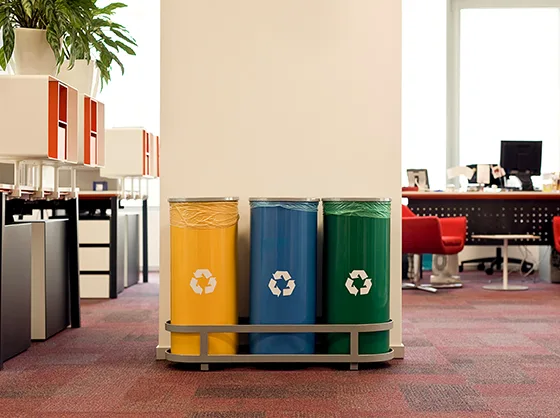
Sorting waste covered by extended producer responsibility
Waste
- Solution type
- Everyday action
- Theme
- Waste
What is an EPR scheme (REP)? The Extended Producer Responsibility (REP) scheme aims to act across the whole life cycle of products, in order to build a more sustainable economy. It acts in particular on product eco-design, waste prevention, extending the period of use (through reuse, re-use and repair), and end-of-life management of products. It means that each economic player is responsible for the entire life cycle of the products it places on the market, in line with the polluter-pays principle. This principle means that the more polluting a product is, the higher the end-of-life costs are for the producer. REP is implemented through the creation of specific streams for each type of product concerned, such as graphic papers, packaging, electrical and electronic products, and many others. These streams are set up to meet today’s environmental challenges, and new REP streams are still to come. Why sort waste covered by REP schemes? These actions are essential to the sorting streams, and manufacturers are required to put them in place. This is called extended producer responsibility (REP). The principle is simple: whoever manufactures, distributes or imports a product must take charge of its end of life. The producer and the distributor must therefore finance, organise and set up the appropriate collection, reuse or recycling solutions for the product. 8.1 million is the number of tonnes of waste that were recycled in 2020 through the REP streams! The State has created 25 REP streams, grouping together major families of products. Manufacturers come together in them to form companies called eco-organisations. These are approved by the State for a maximum of 6 years and undertake to comply with specifications that include collection and recycling targets. The State ensures that these commitments are met. The waste targeted by REP schemes exists in large quantities, is easy to identify, and is often hazardous to the environment if left in nature. Which waste is covered by REP schemes? * DIY and gardening items (ABJ); •Sports and leisure items (ASL); •Pleasure and sports boats (BPS); •Sharp medical devices of patients who treat themselves (DISP-MED); •Furnishing items (EA); •Household packaging (EMBM); •Electrical and electronic equipment (EEE); •Lubricating or industrial oils (LUB); •Toys (JOUET); •Unused medicines (MNU); •Graphic papers (PAP); •Batteries and accumulators (PA); •Tyres (PNEU); •Chemical products (PCHIM); •Products or materials for the building sector (PMCB); •Tobacco products (TABAC); •Clothing textiles, household linen and footwear (TLC); •Passenger cars, vans, 2- or 3-wheeled motor vehicles and quadricycles (VEHICULE). This list will grow as the AGEC law comes into force, with: •During 2023, the catering-sector packaging stream (EMBR), •From 01/01/2024, the chewing gum (GM) and single-use sanitary textiles (TSUU) streams, •From 01/01/2025, the fishing gear (EP), technical aids (AT) and industrial and commercial packaging (EMBIC) streams.
- Sector:
- France
Its features
Reducing waste
Sorting waste under REP schemes encourages reduction at source by prompting producers to design products that generate less waste or to favour recyclable materials.
Recycling
Waste sorting facilitates recycling by separating recyclable materials from non-recyclable waste. This makes it possible to recover raw materials and reduce energy consumption compared with producing new materials.
Savings of natural resources
By promoting recycling, waste sorting helps save natural resources, because manufacturing products from recycled materials often requires fewer resources than production from virgin raw materials.
Environmental preservation
Waste sorting reduces the amount of waste sent to landfill, thereby limiting the risks of soil, water and air pollution associated with inadequate waste management.
Second life
Some non-recyclable waste can be used for energy recovery. However, this must be done responsibly to minimise environmental impacts.
Member map
Map tiles are unavailable. Positions and the list remain available.
No located members for this selection.