
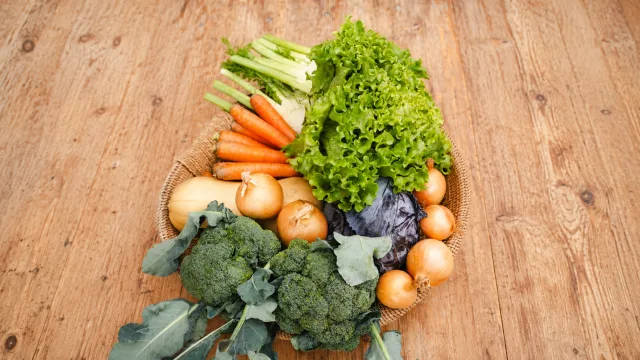
Boxes of fresh, seasonal organic vegetables
Food and drink
- Solution type
- Product
- Theme
- Food and drink
Éric and Caroline offer organic vegetable boxes carefully put together throughout the seasons. Each box contains a selection of fresh vegetables grown with respect for the environment, favouring natural farming practices. The boxes come in two sizes and contain at least seven different vegetables, depending on the harvest and the season. They celebrate human-scale organic farming, fresh, quality vegetables and the natural rhythm of the seasons.
- Sector:
- Bas-Rhin, Haut-Rhin
Its features
Environmentally friendly
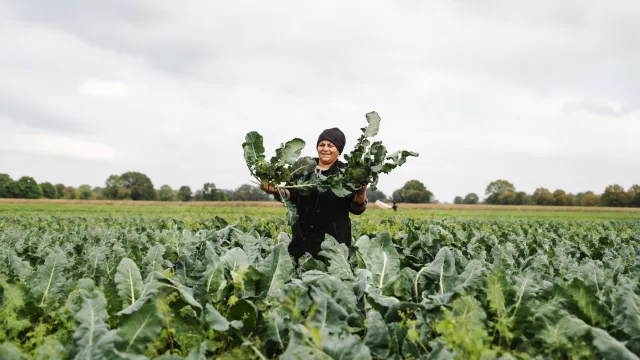
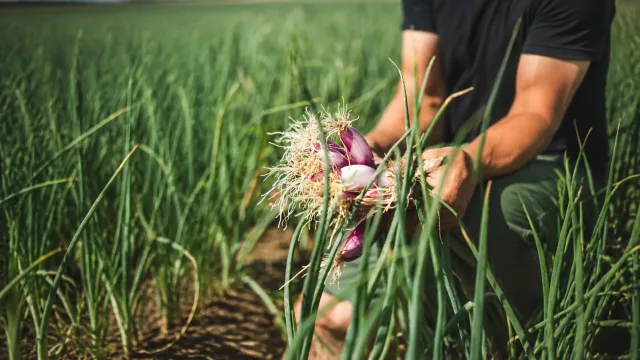
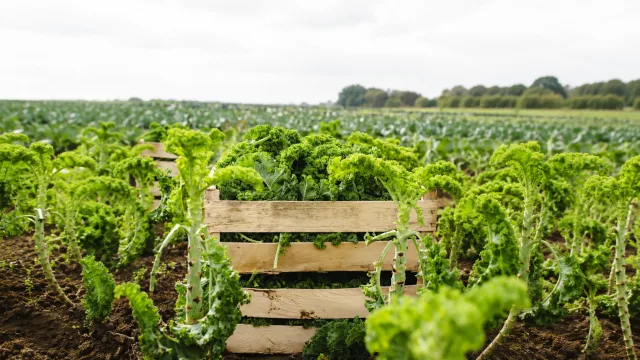
- Production aligned with natural cycles Production follows the natural rhythm of the seasons, limiting the use of artificial production systems and their associated energy consumption. This approach adapts production to natural conditions and helps reduce its environmental impact. - Reusable containers to reduce waste The box system largely eliminates individual vegetable packaging. The plastic transport crates used for deliveries are reused, reducing the need for single-use packaging. - Recovering sorting rejects Vegetables rejected during sorting are recovered in the Biocapsule, a micro anaerobic digester that turns them into energy resources. The electricity and heat produced meet the needs of the farm building. The digestion by-product is also used as crop fertiliser. This approach limits waste and encourages the reuse of resources produced directly on site. - Preserving biodiversity As part of the Apiterre project run by the Aquaterre association, beehives housing around 30 000 bees are installed on site. The project aims in particular to support wild bees, which are essential for pollination and local ecosystems. - Agriculture Biologique certified vegetables: ensuring environmentally responsible farming practices Agriculture Biologique (AB) certification guarantees compliance with a strict set of requirements governing farming practices. It relies in particular on growing methods intended to preserve soils, biodiversity and natural resources. This certification therefore attests to a regulated production approach that is more respectful of the environment.
Second life
The vegetables are offered fresh to minimise losses. At the end of their life, uneaten produce can be composted and returned to the soil as organic matter.
Community solidarity
- Recovering downgraded vegetables through a social integration enterprise Vegetables that do not meet marketing criteria are recovered by a social integration enterprise. They are processed for the catering sector, limiting food waste while supporting inclusive employment. - Donating unsold produce and surpluses to charities Unsold produce and production surpluses are regularly donated to local associations, making use of food that is still edible and redistributing it to people facing difficulties. - Supporting the ELA association Every autumn, ornamental gourds are grown and sold to benefit ELA, an association working against leukodystrophies. All sales proceeds are donated to the association.
Life cycle of this solution
Step 1: The producer
Grows vegetables in environmentally responsible conditions.
Step 2: The distributor
Distributes the boxes through 30 local collection points.
Step 3: The committed consumer
Chooses these fresh organic vegetables for their environmental benefits.
Take this place
Member map
Map tiles are unavailable. Positions and the list remain available.
Selected members (1)
- ERIC & CAROLINEPorte Du Ried