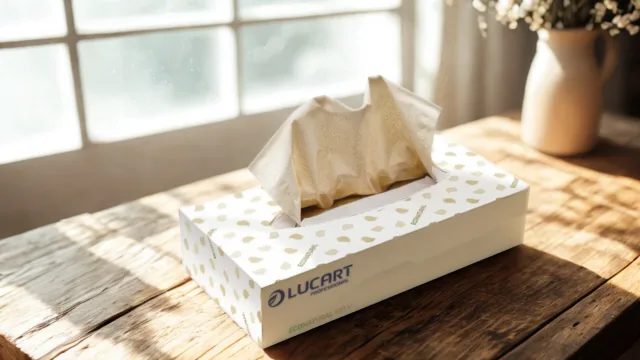
Tissues made from recycled paper
Sector: Doubs, Jura, Bas-Rhin, Haut-Rhin, Vosges, Territoire de Belfort
- Second life
- Environmentally friendly
The AGF sees itself as a gateway to the various issues affecting families, opening up a partnership with specialised services.
Its mission is to provide information, consultation, prevention and training in order to support family dynamics, foster their fulfilment and help families cope with life’s difficulties.
On this page, you will find all of our actions implemented in terms of sustainable development.
Sector: Doubs, Jura, Bas-Rhin, Haut-Rhin, Vosges, Territoire de Belfort

Sector: Doubs, Jura, Bas-Rhin, Haut-Rhin, Vosges, Territoire de Belfort

Sector: France


Sector: France

Sector: France
Sector: Doubs, Jura, Bas-Rhin, Haut-Rhin, Vosges, Territoire de Belfort
Sector: Doubs, Bas-Rhin, Haut-Rhin, Territoire de Belfort

Sector: Doubs, Bas-Rhin, Haut-Rhin, Vosges


Sector: France

Sector: France
Sector: France
Sector: France

Sector: France
Sector: France
Facilities must respect the environment in their purchasing, in particular by following these guidelines:
1. Purchase of eco-labelled products, in particular cleaning products, thanks to labels such as the European Ecolabel, NF Environnement, Ecocert, etc. Textiles must be labelled OEKO-TEX® Standard 100, meaning textiles that have been checked at every stage of processing: raw materials, yarns, dyeing. They contain no chemicals harmful to health;
2. Limiting the purchase of disposable/single-use products: the aim is to gradually replace disposable and/or single-use items with durable equipment.
3. Removal of plastic in the facility: the facility aims to eventually replace all plastic items with items made of durable materials that are safe for children. Where possible, equipment will be replaced as needed over time, when it has to be changed anyway, so as not to create unnecessary excess waste.
4. Favouring suppliers with an environmental policy that offer durable equipment.
In this context, AGF du Bas-Rhin has chosen to work with Réseau COCCI for all hygiene and cleaning needs. In addition to supplying the necessary products, this local partner will support us in setting up and monitoring cleaning protocols, and will train our employees. Committed to an eco-responsible approach, thanks to this partner we will no longer have any waste linked to deliveries (pallets, stretch film, etc.). Users of the service will also have access to a website, “la Fourmilière”, which sets out our CSR approach and offers tips for improving our eco-responsible everyday actions, such as “how to save electricity, how to make your own laundry detergent, etc.”. This collaboration with Réseau COCCI reinforces AGF du Bas-Rhin’s wish to move towards an operation that is efficient, simple and ecological, while promoting partnerships with local businesses.
Tissues made from recycled paper
Sector: Doubs, Jura, Bas-Rhin, Haut-Rhin, Vosges, Territoire de Belfort
Sector: Doubs, Jura, Bas-Rhin, Haut-Rhin, Vosges, Territoire de Belfort
Sector: France
Drawing up supplier specifications with environmental criteria
Sector: France
Partnering with local, environmentally responsible caterers
Sector: France
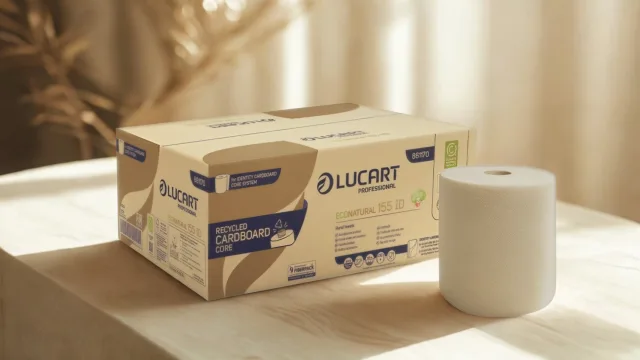
Paper hand towels made from recycled paper, in rolls
Sector: Doubs, Jura, Bas-Rhin, Haut-Rhin, Vosges, Territoire de Belfort
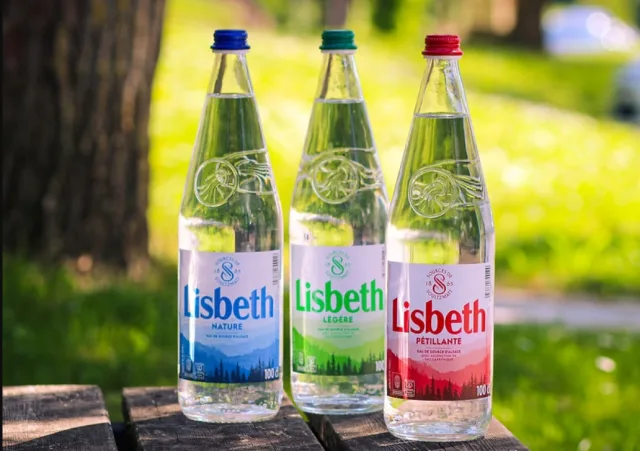
Spring water in a deposit glass bottle - LISBETH
Sector: Doubs, Bas-Rhin, Haut-Rhin, Territoire de Belfort
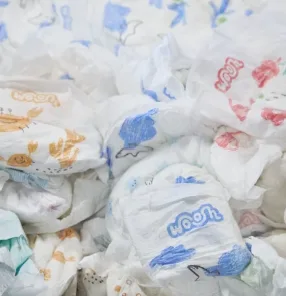
Ecodesigned nappies for young children, including collection and recovery after use
Sector: Doubs, Bas-Rhin, Haut-Rhin, Vosges
AGF du Bas-Rhin is committed to respecting the environment and to supporting the families of the area as well as its teams through the ecological transition we are currently experiencing. To this end, AGF has put in place several actions and reflections in order to follow a sustainable development approach:
• AGF du Bas-Rhin encourages “green” travel among its employees. When travelling, AGF du Bas-Rhin employees are strongly encouraged to use, among other options, public transport, bicycles or carpooling if necessary;
• Since September 2024, half of AGF du Bas-Rhin’s service vehicles have been hybrid in order to reduce its carbon footprint.
Using video meetings instead of non-essential travel
Sector: France
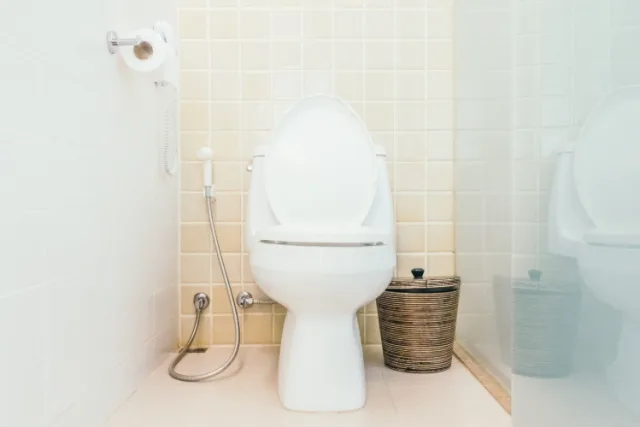
Using water thoughtfully: alongside a system of tap flow reducers (cutting water consumption by about 30%), use of water-saving flushes, and raising children’s awareness from a very young age by not flushing the toilet when it is not necessary.
The ecological and economic issues linked to energy strongly push us to strengthen our energy-saving policy. To do so, facilities follow these guidelines:
1. Carry out regular energy consumption readings so as to readjust consumption if necessary and if possible;
2. Make the most of natural light: artificial lighting, which consumes energy, should only be used when necessary. Halogen bulbs are systematically replaced with low-energy bulbs;
3. Use heating and air conditioning reasonably: with respect for children’s health and well-being, a reasoned use of these systems makes it possible to achieve large energy savings.
4. Regular checks by Management that teams comply with these guidelines;
5. Use of energy-efficient equipment (class A) with low heat output where possible;
6. Organisation of awareness-raising workshops for professionals and families, using various tools and partnerships, in particular with the Chambre de Consommation d’Alsace et du Grand Est, which runs school and general-public awareness workshops on eco-consumption, water, waste, food waste, responsible consumption and energy transition, and which can come to the facility.
7. Creation of a working group made up of one member from each facility to reflect on eco-responsible everyday actions in the groups.
The PPSF can direct families to the Slime 67 scheme (from the CEA), a support service for reducing bills in order to cut their energy consumption.
The AGF educational farm
A centre for introducing nature through animals and for children, the educational farm aims to raise awareness of the living world and to teach respect for the environment.
- A day or half-day at the farm: so that school groups, out-of-school groups and specialised audiences can discover the farm.
- A stay at the farm: for children, who are offered
activities around the environment, food and the interdependence of humans, animals and nature.
- The farm at school: to offer schools practical and fun discovery workshops.
- The farm with the family: to spend a pleasant time
at the farm.
Furthermore, AGF du Bas-Rhin, recognised as an association working for the protection of nature, has developed a specific service dedicated to environmental education: the educational farm located in Rhinau. The Director of the educational farm is a resource person for the staff of the host facilities, advising and supporting them throughout the year in implementing their eco-responsible projects. The farm also has a partnership with the Chambre des Consommateurs d’Alsace, which offers many talks on these subjects across the area.
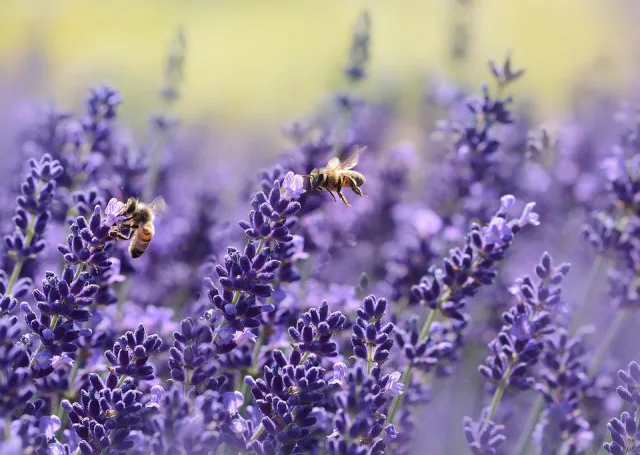
Prioritising local, non-invasive perennial plants indoors and/or outdoors
Sector: France
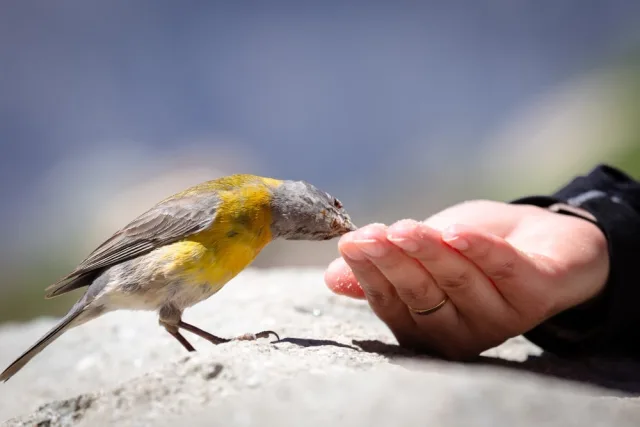
Protecting wildlife as a reference site for LPO or another association
Sector: France
AGF aims to raise children’s awareness of respect for the environment in all of its after-school facilities. To this end, several projects are in place in our facilities and can be transposed to after-school services in the area wherever possible.
For example, each year the team at one of our after-school centres organises 2 to 3 bike outings during which the children and accompanying adults pick up litter along the paths. In addition, all facilities are strongly encouraged to set up “Let’s clean up nature” actions with the children, involving parents where possible.
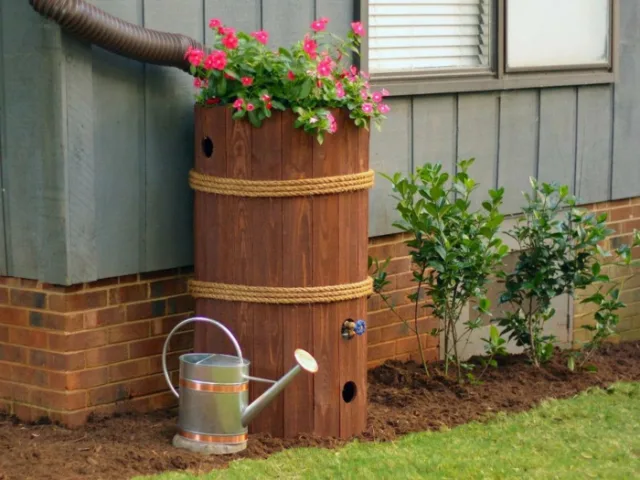
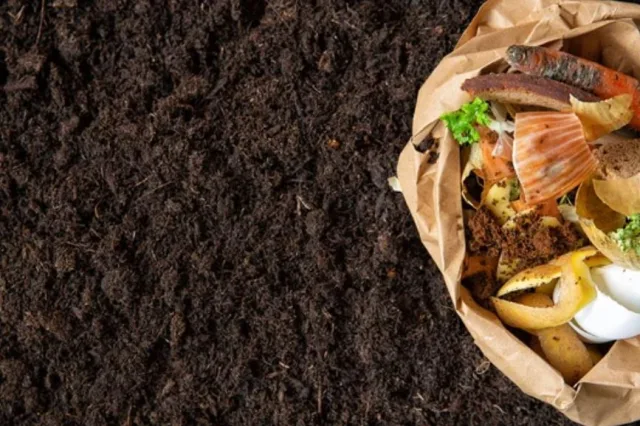
Waste management is a significant part of an eco-responsible approach. We therefore propose to sustain or create compost bins and contributions to biowaste containers.
Awareness-raising workshops for children, but also for families, will be set up, in particular to raise children’s awareness of eco-responsible actions, but also of consumption. The emphasis will be placed on raising awareness of food waste. To this end, workshops, exhibitions and specific activity projects will be among the means of achieving this and thus reducing and limiting food-related waste.
Finally, it is essential that teams integrate the eco-responsible approach in the background of all their educational activities, in particular by favouring recycled and biodegradable materials.
Sorting biowaste and setting up composting
Sector: France
Providing reusable water bottles for employees to avoid disposable bottles
Sector: France
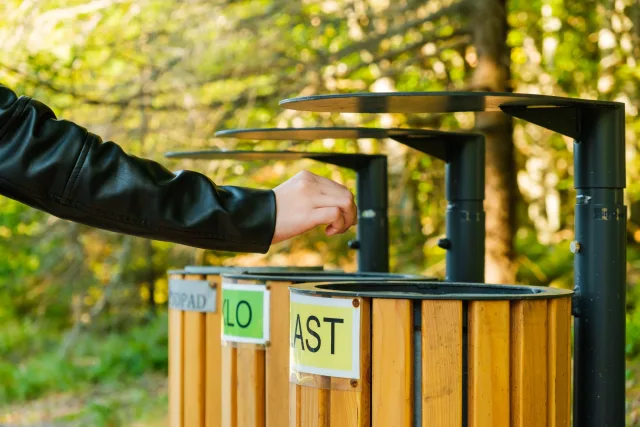
Sorting the 5 / 7 mandatory waste streams
Sector: France